Google Ads in 2026: AI, Performance Max, and Smarter Targeting
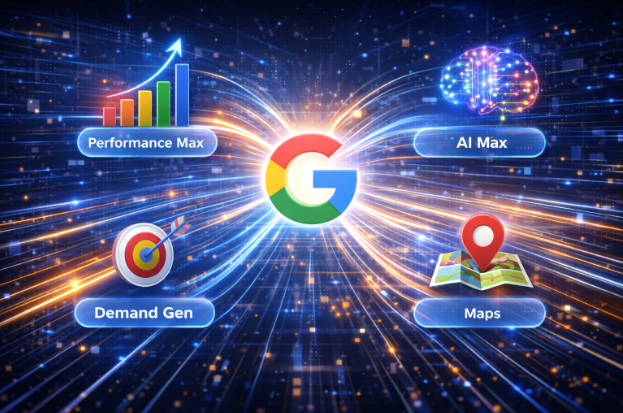
Google Ads has undergone a significant transformation over the past few years. What was once a platform driven primarily by manual control and keyword-level optimization has evolved into a system increasingly powered by artificial intelligence.
Campaign types such as Performance Max have shifted how targeting, bidding, and creative optimization are handled. While this evolution has created new opportunities for efficiency and scale, it has also introduced new challenges for businesses trying to maintain control and maximize performance.
Understanding how to operate within this new environment is critical.
Many companies turn to Google Ads management services to navigate this complexity, but the effectiveness of those services depends heavily on how well they integrate AI into a structured strategy.
Performance Max campaigns, for example, rely on machine learning to optimize across multiple channels, including search, display, YouTube, and shopping. Instead of managing each channel separately, advertisers provide inputs such as audience signals, creative assets, and conversion goals.
The system then determines how to allocate budget and deliver ads.
While this approach can improve efficiency, it also reduces visibility into certain aspects of performance. Advertisers no longer have the same level of granular control they once did. As a result, strategy has shifted from direct control to guided optimization.
This is where structure becomes essential.
A well-defined AI optimization framework ensures that campaigns are built with the right inputs and aligned with business objectives. It provides a foundation for guiding AI systems rather than relying on them blindly.
Audience signals are one of the most important inputs in modern campaigns. Rather than targeting broad keywords alone, advertisers can provide data about their ideal customers. This includes demographics, interests, and behavioral patterns.
When used effectively, these signals help the system identify high-value users more accurately.
However, without a clear understanding of the target audience, these signals can be misaligned. This leads to inefficient spend and lower-quality traffic.
Creative assets have also become more important. Performance Max campaigns rely on a combination of headlines, descriptions, images, and videos to generate ads dynamically. The quality and relevance of these assets directly impact performance.
Businesses must invest in developing strong creative that aligns with their messaging and resonates with their audience.
Conversion tracking is another critical component. AI-driven campaigns depend on accurate data to optimize effectively. If conversion tracking is incomplete or inaccurate, the system cannot make informed decisions.
This results in suboptimal performance and wasted budget.
Ensuring that conversion events are properly defined and tracked is essential. This includes not only primary conversions, such as form submissions or purchases, but also secondary actions that indicate engagement and intent.
According to David Sahly, Vice President of Growth at Pulsion, “AI in Google Ads does not remove the need for strategy. It increases the importance of it. The system performs based on the inputs it receives.”
This highlights a key point. Automation amplifies both strengths and weaknesses. A well-structured campaign will benefit from AI, while a poorly structured one will struggle.
Geographic targeting has also become more sophisticated. Businesses can refine their targeting based on location, adjusting bids and messaging to align with specific regions. This is particularly important for companies operating in localized markets.
Proper configuration of location settings ensures that ads are shown to the right audiences, improving efficiency and relevance.
Budget allocation is another area where AI plays a role. Rather than distributing budget manually across campaigns, systems can dynamically adjust spend based on performance. This can improve efficiency, but it requires clear objectives and monitoring.
Without oversight, budget may be allocated in ways that do not align with business priorities.
Testing remains a critical component of success. Even with AI-driven optimization, continuous testing of creative, targeting, and landing pages is necessary. Small changes can have a significant impact on performance over time.
A structured approach to testing ensures that insights are captured and applied effectively.
Integration with other systems is also important. Google Ads should not operate in isolation. Connecting it with CRM platforms, analytics tools, and other marketing channels provides a more complete view of performance.
This enables better decision-making and more accurate attribution.
As AI continues to evolve, the role of the marketer is changing. Rather than managing individual elements of a campaign, marketers are responsible for defining strategy, guiding systems, and interpreting results.
This requires a different skill set, one that combines technical understanding with strategic thinking.
Businesses that adapt to this shift will be better positioned to leverage the full capabilities of Google Ads. Those that rely on outdated approaches may find it increasingly difficult to compete.
Looking ahead, the trend toward automation and integration will continue. Platforms will become more intelligent, and the ability to guide them effectively will become a key differentiator.
The opportunity is significant, but it requires a structured approach.
Google Ads in 2026 is not about controlling every detail. It is about creating the right conditions for systems to perform at their best.
Companies that understand this and invest in the right strategy will achieve stronger, more consistent results in an increasingly competitive digital landscape.