Why Mobile-First Financial Dashboards Are Winning Over Desktop Tools
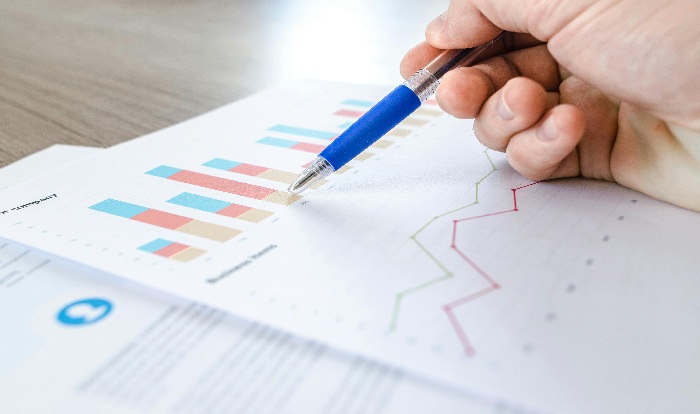
The days of being confined to a desk for financial oversight are quickly fading. Mobile-first financial dashboards are transforming how market participants interact with live data, moving control from stationary workstations to always-on personal devices. This shift highlights a growing need for tools that adapt to real-world mobility instead of imposing rigid workflows.
This can be seen in the situation involving assets such as dogecoin, which is volatility-driven. Market movements typically happen in minutes, so reaction times are faster than those achievable through desktop habits. When this is the case, delayed access can be considered a disadvantage rather than an inconvenience.
Modern finance now rewards awareness over presence. Tools that surface updates instantly keep market participants informed without disrupting daily routines or geographic mobility.
The End of Desk-Bound Market Monitoring
Financial platforms were designed for stationary use. Checking a price or simply watching activity required returning to a computer, opening a series of applications and navigating a crowded interface. Such a dependence no longer fits the patterns of markets or of how individuals live.
Mobile-first dashboards solve this problem by favoring minimalist, responsive designs optimized for short, frequent use. Data loads quickly, with an emphasis on simplifying the layout and stripping out unnecessary layers. Where a technological control panel existed before, a readable and actionable screen has taken its place.
Not according to Statcounter Global Stats, which shows (November 2025) that 52.31% of use is from mobile devices, surpassing desktop use. There is no waiting to “check later.” Awareness happens in real time and wherever the moment strikes.
Simplifying Data Without Diluting Insight
The biggest hurdle for many people entering the digital finance space is the sheer density of information. A lot of desktop software buries critical functionality in menus. Mobile-first dashboards fix this by employing an intuitive design centered on what you need to see and why you need to see it to understand your data and drive decision-making. These applications remove complexity by distilling your data into actionable insights in these ways:
- Single-touch navigation: You move between your portfolio and live charts with one thumb movement.
- Customizable push alerts: You get notified about price breaks directly on your lock screen.
- Biometric security: You use Face ID or fingerprint recognition instead of typing long passwords.
- Interactive visualizations: You see clean graphs that summarize market trends without raw numbers.
Data from the Binance Research Half-Year Report 2025 show that monthly active users in the decentralized finance sector increased by 240% year-on-year. This growth is credited mainly to products that prioritize usability and immediacy.
By streamlining the interface, these platforms ensure you spend less time fighting with the software and more time analyzing the data.
Security That Travels With You
One of the biggest concerns would be the ability to secure a phone, as one can secure a computer. However, a phone will be much more secure than a computer. This would be because secure enclaves would protect the phone within a mobile-first dashboard.
The combination of hardware wallets and apps is a game-changer. The fact is, you can now manage your assets on such an integrated system as you would on a locked-down computer. New security methodologies employ behavioral biometric identification of abnormal activity, providing additional security even when your first level of identification is compromised.
What you get is professional-level security in a package that fits in your pocket.
Capturing the 24/7 Market Pulse
Global markets are always open; thus, the static quality inherent in a computer desktop becomes a drawback. Mobile-first applications are designed for a 24/7 rhythm.
They give you a constant flow of real-time information, keeping you in touch with the global economy no matter your time zone. Functions such as sentiment analysis and real-time news are seamlessly integrated into the mobile experience.
The most important aspect of dealing with volatility is staying up to date with the prevailing trends. These trends can be accessed easily through the mobile dashboard, which uses modules to display the information. It is possible to go from analyzing an insight report to looking at the live price.
Usually, desktop interfaces struggle to emulate such a flow because they work with browser tabs and windows, which shatter your attention.
Bridging the Gap to Global Inclusion
The move to mobile is not just an issue of convenience but of global inclusion. Many areas of the world have bypassed the desktop computer and gone straight to mobile devices.
With mobile-first dashboards, developers have made entry easier for millions of people around the world. The mobile-first dashboard enables anyone with a smartphone to access a complex financial infrastructure.
According to the Binance 2025 Insights Hub, the total number of global users surged to 250 million in the first few years of 2025, with daily registration figures estimated in the thousands. These registration figures and the total user base have been particularly fueled by the shift to platforms that provide an easy-access, centralized and convenient mobile user experience.
With network scalability increasing, more and more developers choose mobile-optimized systems on which to work.
Indeed, this is further evidence that the main way the world engages with finance is no longer through a fixed screen but through a dynamic, portable experience.