Prior Authorization Is a Routing Problem Disguised as a Healthcare Problem
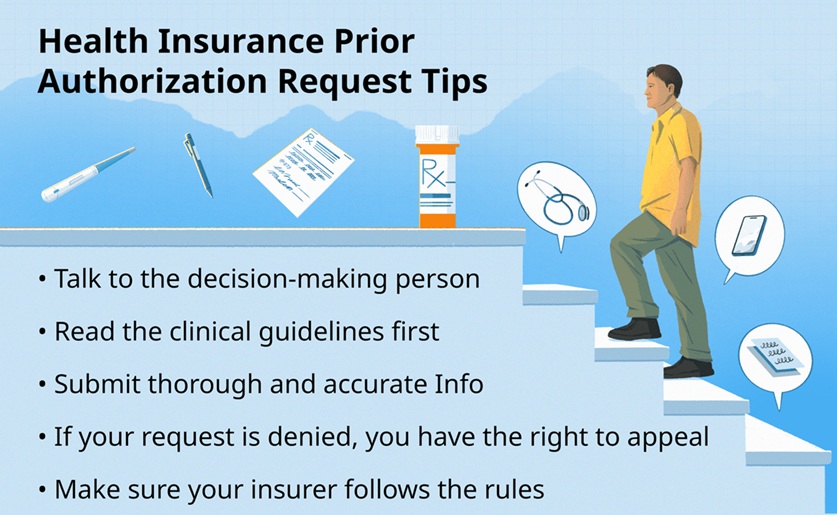
When a patient receives a treatment recommendation from their physician, they expect to move forward with care quickly. Instead, they often encounter a waiting period that has nothing to do with medical necessity and everything to do with how information flows between healthcare organizations. Prior authorization represents one of the most persistent bottlenecks in modern medicine, yet its root cause is frequently misdiagnosed. The problem is not fundamentally about clinical judgment or insurance policy logic. It is a routing problem, a systems failure that treats information as though it is stuck in a maze when it should move in a straight line.
The System Was Built for a Different Era
Prior authorization emerged decades ago when insurance companies and healthcare providers operated in largely separate worlds with limited technological connection. The process required manual phone calls, faxed documents, and paper trails that could take weeks to navigate. Hospitals and clinics struggled to track the status of authorization requests because no integrated system existed to monitor them. The delays were built into the infrastructure itself, not because the medical decision required extensive deliberation, but because the logistics of information transfer demanded it.
Today, the underlying infrastructure has transformed. Electronic health records exist in most healthcare settings, and real-time data exchange is technically feasible. Yet the prior authorization process has not evolved to match these capabilities. Instead, it has accumulated more steps, more stakeholders, and more barriers without improving its efficiency. A request that could theoretically be verified in minutes often takes days or weeks because it must travel through multiple disconnected systems, each acting as a separate routing station rather than part of an integrated network.
The Real Culprit: Information Fragmentation
The core issue is that prior authorization requests flow through disconnected channels instead of integrated pathways. A physician’s office generates the authorization request, but it may arrive at the insurance company via fax, phone, secure portal, or email, depending on what technology each organization uses. The insurance company then reviews it using processes that may be partially automated or almost entirely manual, depending on their infrastructure investments. Meanwhile, the requesting physician’s office has no real-time visibility into where the request stands in the review process.
This fragmentation creates a coordination problem masquerading as a clinical review problem. When an authorization takes three weeks instead of three days, it is usually not because the clinical decision required that much time. It is because the request bounced between systems, got lost in a queue, was submitted incomplete, or required manual intervention at multiple points. Studies from various healthcare organizations have documented that a significant portion of prior authorization delays stem from incomplete submissions and back-and-forth communication, not from the time needed to make an informed medical decision. These delays could be eliminated with routing infrastructure that ensured complete submissions and provided real-time status updates.
The Impact on Patient Care and Provider Workflow
For patients, routing failures manifesting as prior authorization delays carry serious consequences. Treatment gets postponed, which can allow certain conditions to worsen before care begins. Emergency situations occasionally arise where a patient receives care but then faces financial complications because authorization did not arrive in time. Providers face equal frustration, employing staff whose primary job is to track authorization requests, resubmit incomplete forms, and call insurance companies to check status. This administrative overhead exists not because prior authorization itself is irredeemably flawed, but because the routing mechanism that carries authorization requests is fundamentally broken.
The workflow consequences are substantial. Many physician practices report spending several hours each day managing prior authorization requests, with staff developing specialized knowledge of which insurance companies accept which submission methods. Some practices maintain multiple phone lines, fax machines, and portal accounts just to communicate with different insurance companies. During active inpatient stays, hospitals managing real-time approvals rely on concurrent utilization review platform solutions to keep authorization status visible and reduce the manual coordination burden that compounds fragmentation. This redundancy reflects a system that has never been optimized for efficient information routing and instead expects individual organizations to compensate for systemic inefficiency.
Why Treating It as a Healthcare Problem Misses the Point
Many proposed solutions to prior authorization focus on changing authorization criteria, limiting which treatments require prior approval, or streamlining the clinical decision-making process. These approaches assume the bottleneck exists because insurance companies are making decisions too slowly or requesting inappropriate information. While some of this may be true, it does not address the routing problem. Even with streamlined criteria and faster decision-making, prior authorization remains slow if requests continue to move through disconnected, manually intensive systems. Conversely, prior authorization could function acceptably if requests moved through integrated channels quickly, even if the approval criteria remained unchanged.
The routing perspective suggests a different set of solutions. Instead of focusing on whether prior authorization should exist, the focus shifts to whether requests and responses can move through standardized, connected systems in real time. This requires technical infrastructure that allows healthcare providers and insurance companies to exchange structured data securely, along with agreed-upon standards so that all parties submit and receive information in consistent formats. These are systems engineering problems, not healthcare policy problems. They require investment in interoperability infrastructure, but they do not require changing the fundamental logic of clinical review.
Moving Toward Integrated Routing
Some healthcare organizations and insurance companies have begun addressing the routing problem directly by investing in integration platforms that allow secure, structured data exchange. These implementations have demonstrated that prior authorization timelines can compress significantly when routing inefficiencies are eliminated. Requests that previously took two weeks now resolve in two days, not because authorization criteria changed, but because the request moved through an integrated system. The clinical work of making an authorization decision remains similar, but the administrative burden of routing requests through multiple systems is substantially reduced.
Broader adoption would require industry-wide coordination, which remains a challenge. The technical building blocks already exist: health information networks, secure messaging systems, and data standards have been developed. The barrier is not technological feasibility but rather fragmented incentive structures and varying investment levels across healthcare organizations. Smaller insurance companies and physician practices may lack the resources or priority to build integration infrastructure, creating a coordination problem that overlays the routing problem, though neither diminishes the other.
Conclusion
Prior authorization remains one of healthcare’s most visible pain points, affecting patients, providers, and insurance companies alike. The standard narrative frames it as a healthcare access problem or an insurance company problem, but this framing directs attention away from the real culprit: a broken routing system that moves authorization requests through disconnected channels using manual, inefficient processes. The solution lies not primarily in changing authorization criteria or clinical review standards, but in building integrated infrastructure that allows information to move securely and efficiently between all parties. When prior authorization requests can flow through standardized, connected systems, the delays that currently define the process would largely disappear. Solving prior authorization requires less healthcare policy reform and more systems engineering investment, focused on making routing infrastructure match the capabilities of modern technology.