Automated Secrets Management: The Next Step in Secure Cloud Operations
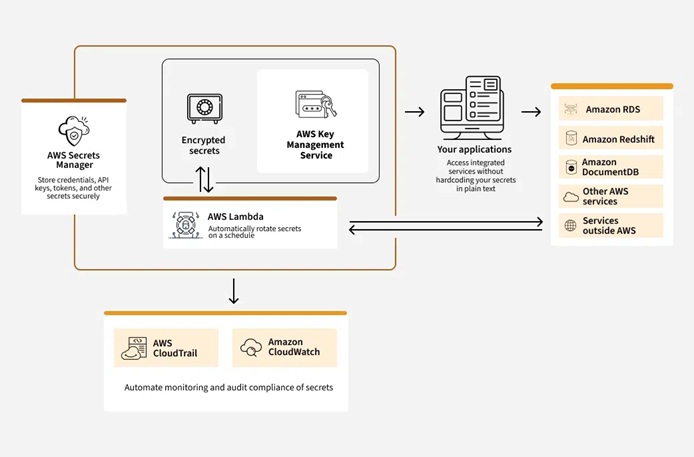
In today’s cloud-driven environment, automated secrets management has become an essential pillar of modern IT security. As organizations transition toward hybrid and multi-cloud infrastructures, the complexity of managing credentials, API keys, tokens, and certificates across distributed environments continues to rise. Manual handling of secrets is not only time-consuming but also prone to human error — and in the cybersecurity world, a single mistake can cost millions. This is where automation steps in, revolutionizing the way businesses safeguard access and maintain compliance without slowing down their innovation.
Understanding Automated Secrets Management
At its core, automated secrets management refers to the process of automatically creating, storing, rotating, and revoking sensitive credentials without manual intervention. This system ensures that no unauthorized individual can access privileged information, while also minimizing the exposure of sensitive data during development and deployment cycles.
Traditional secrets management relies heavily on human oversight — developers embedding passwords into code, teams manually updating keys, or storing them in shared documents. Automated systems eliminate this risk by integrating directly with CI/CD pipelines, cloud services, and orchestration tools. They can dynamically issue short-lived credentials and revoke them instantly when no longer needed, keeping every endpoint and service in check.
Why Automation Is Crucial for Cloud Security
Cloud environments are dynamic by nature. Virtual machines spin up and down, containers get deployed in seconds, and APIs connect multiple layers of infrastructure simultaneously. This constant motion demands a real-time, policy-based approach to secrets management.
Without automation, organizations face challenges such as:
- Credential sprawl: Too many keys and tokens across systems with limited visibility.
- Human error: Accidental exposure of secrets in repositories or logs.
- Non-compliance: Failing audits due to outdated or hard-coded credentials.
- Delayed incident response: Difficulty in revoking compromised secrets quickly.
By implementing automated secrets management, IT teams ensure that secrets are encrypted, regularly rotated, and centrally monitored, dramatically reducing the attack surface.
Key Benefits of Automated Secrets Management
- Enhanced Security Posture
Automated systems ensure secrets are never hard-coded or manually distributed. Access is granted on-demand and revoked immediately after use, reducing the window of vulnerability. - Operational Efficiency
Automation frees DevOps and security teams from repetitive key management tasks, allowing them to focus on innovation and optimization. - Regulatory Compliance
Many frameworks such as ISO 27001, SOC 2, and HIPAA require strict control over secret access and rotation policies. Automation ensures these controls are enforced continuously and auditable in real-time. - Scalability and Agility
As your infrastructure grows, so does the complexity of managing secrets. Automated solutions scale effortlessly across multiple environments and cloud platforms. - Reduced Human Error
By minimizing manual processes, the system lowers the risk of accidental credential leaks or misconfigurations.
How Automated Secrets Management Works
Most automated systems follow a layered approach involving vaulting, encryption, access control, and monitoring:
- Vaulting and Storage:
Secrets are encrypted and stored in a secure vault accessible only through authenticated requests. - Dynamic Secret Generation:
Instead of static credentials, systems generate temporary secrets that expire automatically after a set time or event trigger. - Automated Rotation:
Secrets are regularly rotated based on predefined policies, ensuring that compromised credentials have limited impact. - Access Policies:
Identity-based policies ensure that only authorized services and users can request or use specific secrets. - Auditing and Monitoring:
Every secret retrieval or modification is logged and monitored, enabling full traceability during compliance audits or security reviews.
Leading Tools for Automated Secrets Management
A few trusted platforms have set industry standards in this domain:
- HashiCorp Vault:
Offers fine-grained access controls, dynamic secret generation, and integration with cloud-native tools like Kubernetes and AWS IAM. - AWS Secrets Manager:
Designed for AWS workloads, providing automated rotation and integration with Lambda functions and RDS databases. - Azure Key Vault:
Microsoft’s solution for centralized key and secret management across hybrid cloud environments. - CyberArk Conjur:
Enterprise-grade secrets management designed for DevOps and CI/CD security at scale.
Each tool provides varying levels of automation and integration, but all aim to streamline credential lifecycle management and strengthen organizational security frameworks.
Best Practices for Implementing Automated Secrets Management
- Centralize All Secrets:
Avoid storing credentials in multiple places. A unified secrets management system improves visibility and governance. - Adopt Least Privilege Access:
Limit access to only those users or applications that absolutely need it. - Integrate with CI/CD Pipelines:
Embed automation into your deployment workflows to ensure secrets are handled securely during builds and updates. - Enable Continuous Rotation:
Regularly rotate credentials and tokens to mitigate the risk of long-term exposure. - Monitor and Audit Usage:
Use built-in logging and monitoring tools to detect unusual access patterns or potential breaches.
The Role of AI and Machine Learning
As the cybersecurity landscape evolves, AI-driven secrets management is beginning to emerge. Machine learning algorithms can analyze access patterns, detect anomalies, and automatically adjust policies to mitigate risks in real-time. For example, if a system detects an unusual number of secret retrievals from a specific location or device, it can automatically revoke access and trigger alerts.
This next phase of automation promises self-healing security systems, where secrets management becomes both proactive and predictive — reducing response times and preventing breaches before they occur.
The Future of Automated Secrets Management
The future of secrets management lies in zero-trust architectures and context-aware automation. Organizations will increasingly rely on real-time authentication, ephemeral secrets, and machine identity management to protect modern cloud ecosystems. As regulatory frameworks tighten and data breaches become costlier, adopting an automated approach will no longer be optional — it will be a baseline requirement for security resilience.
Final Thoughts
In an era where digital infrastructure powers every business operation, automated secrets management is more than a convenience — it’s a necessity. By automating the way credentials are stored, rotated, and audited, organizations can safeguard sensitive data, streamline operations, and maintain compliance effortlessly.