Infosys vs TCS: Who is the IT King of India?
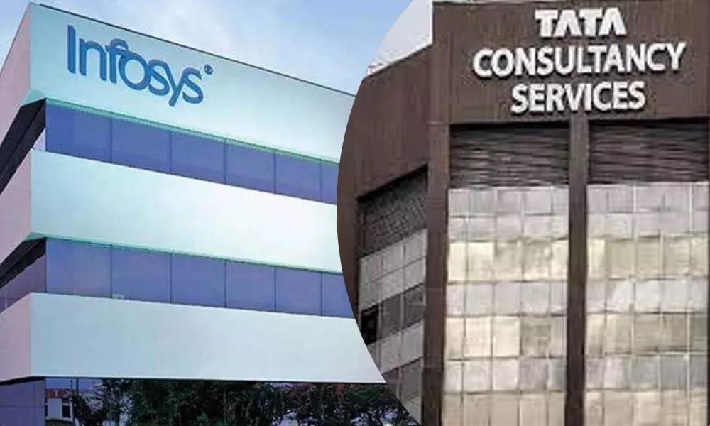
the IT King of India
With Tata Consultancy Services and Infosys in the forefront, India’s IT industry has created international behemoths that fight on the global scene. Serving Fortune 500 firms and leading global digital change, these two titans have shaped India’s image as a technological powerhouse. As indicators of the health of India’s IT sector, buyers keep a careful eye on changes in the share prices of Infosys and TCS. Because both businesses have unique histories, business plans, and growth strategies, market players looking to get insight into India’s fast growing technology services sector would find the comparison intriguing.
From Humble Beginnings to Global Dominance
Before being a separate company in April 2004, TCS was started in 1968 as a branch of Tata Sons. An important turning point for Indian financial markets was its initial public offering (IPO) in August 2004. Taking a fresh approach to business, N.R. Narayana Murthy started Infosys in Pune in 1981 with just $250 in cash. Infosys opened with an amazing premium of ₹145 per share when it went public in February 1993 at ₹95. When Infosys offered American Depository Shares for $34 in March 1999, it became the first Indian business to be traded on the NASDAQ. Investor views of TCS’s share price stability and Infosys’s share price growth prospects are affected by these diverging paths, which indicate different corporate cultures. TCS is backed by the past of the Tata Group, whereas Infosys is a startup that has grown into a giant.
Battle of the Titans: Size and Reach
With a team of over 6,14,000 consultants in 55 countries, TCS runs important government projects including the improvement of the GeM site and Passport Seva Kendra. The corporation has great growth goals and aims to hit $50 billion in revenue by 2030. With a value of $67 billion as of Q1 FY2024, Infosys’s largest regional revenue share comes from serving over 185 Fortune 500 businesses with a major presence in North America. Due to its unique working methods and client interaction strategies, TCS uses a far larger workforce than Infosys. Investors consider staff efficiency ratios and income per employee when making investment choices, and these scale discrepancies have a direct effect on Infosys share price estimates and TCS share price measures.
Digital Arsenals: Technology and Innovation Showdown
Both businesses have grown into full-service partners for digital transformation, going beyond normal IT services. Across eleven key areas, TCS offers advice, cloud services, cybersecurity, data analytics, IoT digital engineering, cognitive business operations, and sustainability services. Creating smooth client experiences is the main goal of their TCS Interactive business. Alongside basic services like product engineering and infrastructure management, Infosys places a strong focus on digital services like blockchain, AI-powered solutions, metaverse apps, and digital marketing. Scalable systems like Finacle, McCamish, and Panaya are created by Infosys. Investor trust in Infosys’s share price growth potential and TCS’s share price stability during market downturns are affected by these technology skills.
Captains of the Ship: Leadership Philosophies
Krithivasan, the CEO of TCS, has over 30 years of company experience and was the head of the BFSI business group before that. Salil Parekh, the CEO of Infosys, had thirty years of experience in global IT services, including twenty-five years at Capgemini, where he oversaw major changes. In order to maintain creator engagement, co-founder Nandan Nilekani holds the post of Chairman. TCS targets 10–12 projects and focuses on internal startup development and organizational reorganization. Infosys retrains workers and improves localization while chasing strategic acquisitions like BASE, Oddity and Simplus. These opposite approaches—TCS’s organic growth and Infosys’ acquisition-led expansion—create distinct risk-reward profiles that influence how the TCS and Infosys share price respond to industry events and market circumstances.
The Verdict: Two Kings, Different Crowns
Blue-chip IT investments with unique traits are reflected by both stocks. While Infosys offers business agility, TCS’s backing from the Tata Group provides institutional security. Corporate actions vary; Infosys gave many bonus shares, including 1:1 ratios in 2018 and 2015, while TCS carried out buybacks of ₹18,000 crore in 2022. Market recognition varies; Infosys is one of the top three worldwide IT companies, whereas TCS has been a Top Employer for eight years running and has won customer happiness polls in Europe. The “IT King” title is based on individual investment requirements and market cycles as a result of these factors, which create distinct investor profiles drawn to each company.