HR Metrics Dashboard: How to Track and Visualize Workforce Performance Effectively
Why Tracking HR Metrics Is Critical
Organizations in today’s competitive and dynamic work environment face an expectation to manage their workforce with enhanced precision and insight as well as accountability. HR functions beyond administration because it actively helps create business strategies. Real-time data-driven insights about employee performance and engagement together with turnover information and more become essential for HR leaders to fulfill their responsibilities. The HR metrics dashboard proves its value in this situation.
An HR metrics dashboard unites essential people analytics within a centralized platform which enables HR professionals and managers and executives to generate decisions that drive workforce optimization and organizational success.
What Is an HR Metrics Dashboard?
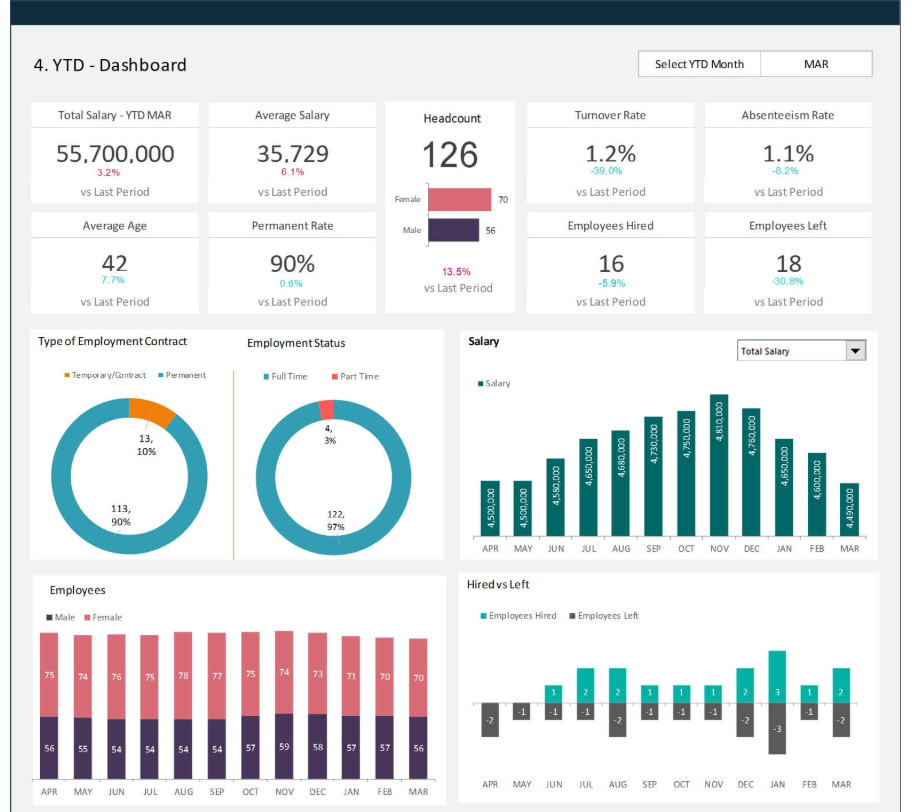
The HR metrics dashboard serves as an interactive reporting system which continuously monitors human resources KPIs before displaying them in real time. The platform development can occur through Excel or Power BI or Tableau or through integration with HR systems such as BambooHR, Workday, or SAP SuccessFactors.
The well-designed dashboard enables organizations to monitor essential workforce indicators including turnover rates and hiring patterns and absenteeism and productivity and training success and diversity metrics through an instant view. The dashboard both streamlines complex data presentation while helping HR share information with other business units through collaboration.
Better Insights about Workforce Performance
HR leaders gain instant access to workforce health and performance metrics through a dashboard system. Users gain full visibility into multiple metrics through one dashboard including employee engagement scores and time-to-hire and training hours completed. The improved visibility streamlines both speed and quality of decision-making processes.
HR Strategy and Planning becomes more effective when supported by data.
Traditional HR functions transform into proactive strategic partners when organizations implement an HR dashboard. Organizations can prevent problems from escalating by monitoring trends and patterns which identify potential challenges such as employee turnover increases or engagement declines. HR strategies achieve better alignment with business objectives through decisions supported by data.
Better Communication with Executives and Stakeholders
Executive decision-making requires data which presents itself in straightforward ways. An HR dashboard assists HR teams to demonstrate their value through business-focused reporting. The evidence presented through dashboards enables organizations to demonstrate how employee retention affects profit margins and learning initiatives boost performance results.
Time Savings Through Automation
The process of manually gathering reports requires excessive time and leads to potential mistakes. Automated dashboard systems which synchronize data in real time from HR systems reduce manual reporting tasks and deliver precise data with reduced human intervention. The elimination of reporting tasks allows HR teams to dedicate their resources toward strategic work instead of data preparation.
The following HR metrics require inclusion in your dashboard:
Headcount and Workforce Composition
The active employee number together with departmental and role distribution and location and contract status data is presented through this metric. The metric enables organizations to establish fundamental knowledge about their size and structure while allowing the tracking of workforce alterations throughout time.
Time to Fill and Time to Hire
Recruitment metrics track the duration needed to fill available positions as well as candidate progression throughout the hiring process. Recruitment process delays can be detected through high time-to-fill numbers and time-to-hire results show both candidate satisfaction levels and recruitment efficiency.
Employee Engagement Score
The periodic surveys used to measure employee satisfaction and motivation and their connection to the company mission produce engagement scores. A decrease in employee engagement scores frequently signals that turnover rates will increase along with performance degradation.
Design Best Practices for HR Dashboards
Keep the Layout Simple and Logical
The dashboard design should provide users with clear pathways to move from basic overviews to detailed analytical content. Different categories including Recruitment and Retention and Learning & Development and Diversity should have their own tabs or sections. The dashboard should contain essential metrics which drive value while avoiding unnecessary information.
The dashboard should display current data which updates either in real-time or at regular intervals. The dashboard’s frequency of updates should be weekly or more often because outdated data erodes trust and produces suboptimal choices. Power Query (Excel) and Power BI refresh schedules and API integrations with your HRIS should be used to maintain current dashboard data.
Building a Culture of Accountability and Transparency
The visibility of HR metrics to managers and executives builds an organizational culture that emphasizes accountability. Department leaders who view their team’s retention patterns and engagement metrics and absenteeism statistics will feel more responsible to create positive changes.
Enabling Proactive, Not Reactive, Decision-Making
Real-time workforce health monitoring through HR dashboards eliminates the need for annual reviews and exit interviews. Leaders gain the power to make timely decisions through this platform which helps them modify recruitment approaches and start wellness programs and enhance onboarding processes.
Empowering HR Through Data and Insight
An HR metrics dashboard functions as an essential strategic tool rather than a discretionary addition. Workforce indicators that organizations track and display enable them to achieve better talent optimization and cultural enhancement and support organizational growth. The goal of both Excel and full BI platform HR dashboard development remains to convert HR data into useful insights.
Start with What Matters Most
The first step in developing your HR dashboard should be to keep it simple.
Your first HR dashboard should include essential metrics such as headcount numbers alongside turnover rates and absenteeism data and employee engagement scores. The addition of more sophisticated analytics layers such as diversity metrics and learning effectiveness will become possible as you become more comfortable with data analysis. The dashboard development process should include stakeholders from different business areas to validate its effectiveness in addressing real-world decision-making requirements. Bizinfograph offers ready-to-use dashboard templates on Finance, Sales, HR and Manufacturing.