Creating a Play Space for Kids That Actually Holds Their Attention
Key Takeaways:
- Most play areas fail because they focus on storage instead of play value
- Engagement drops when spaces are overstimulating or filled with passive toys
- Separating zones based on activity type encourages longer, deeper play
- Flexible setups make it easier for the space to evolve as your child grows
You’ve probably seen it before — a neat shelf, some labelled tubs, and a rug in the corner. It looks like a play space, but within a week your child is dragging toys back into the living room, ignoring that perfect setup. The issue usually isn’t the mess or the lack of organisation. It’s that the space was made to contain toys, not to invite play.
Children aren’t drawn to order. They’re drawn to movement, surprise, comfort, and the feeling that something new might happen. A space that works well for adults, with everything in its place and out of the way, doesn’t always match how kids think or play. That’s why the most effective play areas are ones that offer some flexibility — a layout that changes depending on the day, and materials that invite curiosity.
Instead of thinking about how to store everything, think about what encourages your child to stay in the space. Is there somewhere soft to land? A surface that feels good to touch? Enough room to spread out and make a mess without being told to clean up halfway through? These are the elements that matter more than shelves or bins.
It’s also worth stepping into the space yourself. Sit on the floor, look around at your child’s eye level, and see how it feels. Are they able to reach the materials they enjoy most? Is the lighting comfortable, or does it feel a bit stark? Sometimes, just shifting a lamp or removing visual clutter can make the entire area feel more inviting.
Why Engagement Drops After the First Week
That burst of excitement when you introduce a new play space is usually short-lived. Most kids lose interest after a few days — not because they’re ungrateful or bored, but because the environment doesn’t support sustained attention. This drop-off is common, especially in spaces that rely on novelty.
Clutter plays a big role here. Too many toys on display can overwhelm kids, especially if there’s no clear purpose or flow to the area. Instead of feeling energised, they feel unsure of where to start — and that uncertainty often leads them to disengage altogether.
The other common pitfall is the dominance of passive toys. These are the ones that do the work for them: flashing lights, preset sounds, single-function gadgets. At first, they’re fascinating. But once a child figures out what they do, there’s little reason to go back. Active toys — the ones that require imagination, problem-solving, or repetition — are the ones that hold attention.
Environmental overstimulation can also creep in. Bright colours, harsh lighting, too many wall decals or character themes can make a space feel more like a showroom than a play area. When kids are surrounded by too much visual noise, it’s harder for them to settle into deep play.
The good news is that you don’t need to start from scratch to fix this. Swapping out just a few items, simplifying the layout, or removing some visual distractions can often bring life back into the space. It’s not about constantly rotating everything — it’s about observing what your child returns to naturally and making sure that those materials are easy to access and free from unnecessary competition.
Creating Zones Based on Type of Play
One of the easiest ways to make a play space more functional is by separating it into distinct areas based on how your child prefers to play. Most homes don’t have room for a dedicated playroom, but even within a small area, you can create a sense of structure just by observing what types of activities your child gravitates toward.
Start by identifying the main categories. For many kids, these fall into four broad groups: movement, imaginative play, quiet time, and sensory or creative work. If everything is jumbled together in one corner, it can feel chaotic — both for you and your child. But if there’s a clear place to build, a soft corner to read, and a spot where they’re allowed to be messy, the space becomes easier to use and enjoy.
You don’t need walls or fancy dividers. A low shelf can separate one zone from another. A rug can help define a building area. A curtain or nook can become a cosy reading spot. By creating visual and physical boundaries, you’re not restricting play — you’re giving it room to deepen. Kids begin to understand what each area is for, and transitions between activities become smoother.
It also helps reduce arguments. When there’s a clear zone for drawing, for example, it’s easier to keep markers away from the couch. And if there’s a set place for high-energy play, you’re less likely to see couch cushions turned into trampolines. A bit of structure goes a long way in supporting independent, focused play without needing constant reminders.
What Keeps Hands and Minds Busy Long-Term
Some toys get used for years, while others barely last a week. The difference often comes down to how open-ended they are. Toys and tools that allow for multiple outcomes tend to hold interest much longer than those that offer just one function. This is especially true in spaces where kids are expected to entertain themselves without screens or constant supervision.
A well-stocked art cart, for example, doesn’t need to be expensive. A few types of paper, washable paints, glue, and scrap materials can lead to hours of self-directed work. Loose parts like buttons, pebbles, fabric scraps or cardboard tubes become building materials, creatures, or entire worlds — depending on the day.
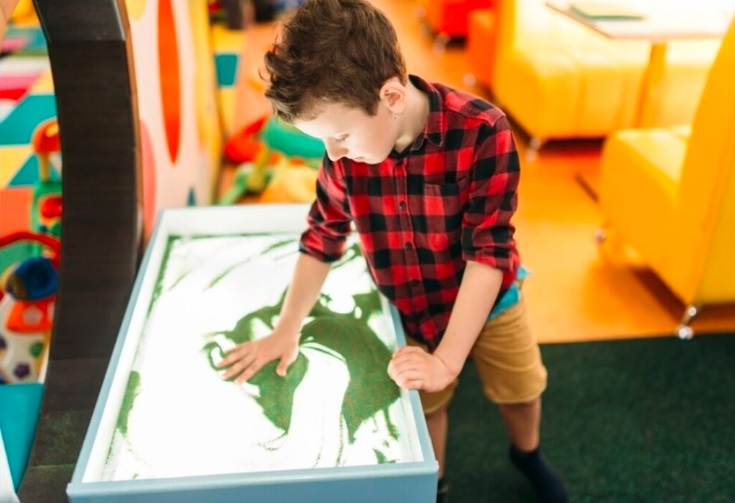
Among the most effective setups for long-term engagement is a sensory table, particularly one that you can adapt across seasons and themes. It doesn’t need to be fancy — even a repurposed storage tub at child-height can do the job. What matters is that it offers variety. One week it might hold coloured rice and scoops. The next, kinetic sand and figurines. Later, you might rotate in water beads or simple kitchen tools. These materials invite touch, movement, and repetition — all essential ingredients for the kind of focused play that builds real-world skills.
Because the contents change, the sensory space doesn’t become stale. And because the activity itself is unstructured, kids of different ages can use it in ways that suit their development. It becomes a background activity — one they return to between other play, or during quiet parts of the day — without needing constant adult input.
Designing a Space That Can Grow With Them
A well-thought-out play area shouldn’t need a total refresh every time your child has a growth spurt or shifts interests. The more flexible the foundation, the easier it is to make small changes without having to replace everything.
Start with furniture that isn’t overly themed or age-specific. A low table used for crafts today might become a homework desk later. Open shelving lets you swap out materials without having to rearrange the whole room. Even toy storage can evolve — crates that once held wooden blocks can later house books or games, simply by moving them to a different spot.
One thing that helps is choosing a neutral base. Walls, furniture and large items in calm tones allow the toys and materials to be the most visually stimulating part of the room. This keeps the environment from feeling overwhelming as you add or remove items over time. It also makes it easier to pivot when your child moves from trucks and dinosaurs to science kits and board games.
Involving your child in the setup process can also make a difference. Kids are more likely to use a space they’ve helped create. Ask what they enjoy doing most, or what feels missing in their current play area. Their answers might surprise you — and can give insight into how to design a space that supports their creativity, not just keeps things tidy.
The goal isn’t to build a perfect room. It’s to create an environment that adjusts alongside your child’s needs, and encourages them to keep using it in new and creative ways. When a play space is set up with change in mind, it becomes less about managing toys and more about supporting growth.