How Headless CMS Facilitates Business Expansion into New Markets
One of the easiest ways for an organization to grow is by expanding into new markets and at the same time, one of the most complex. Just because a company thrives in its home country doesn’t mean it will thrive in other countries or even other regions. There are different languages and cultural expectations, different shopping and customer engagement opportunities, different regulations and compliance issues, and different technology based on engagement. Therefore, when companies enter these realms, they need to quickly adjust their content and digital experiences without sacrificing brand integrity or functional efficiency.
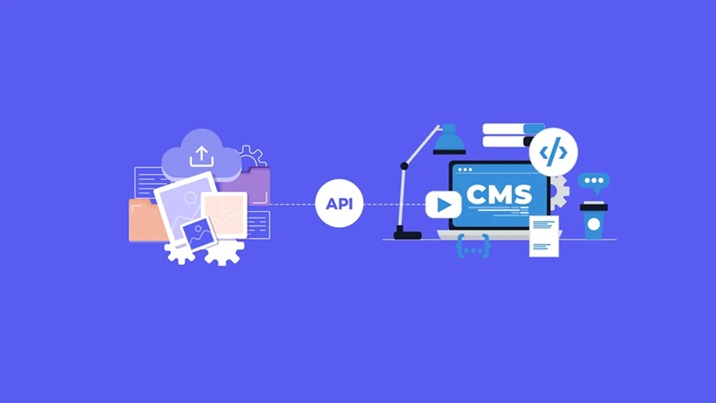
Thus, in a content-hungry digital world, content is the messenger to and taxi from companies to prospective new consumers. It creates value propositions, builds trust, and offers instruction on how to engage and purchase. The ability to make content management functional from here to there will be a make-it-or-break-it situation for expansion efforts. Therefore, relying on a Headless CMS is a modern-day option to this scalability challenge. By dissociating the need for content management from the front-end experience rendering via API delivery, it enables all companies to create manageability for any channel and market.
Specifically, a Headless CMS supports the companies that need to develop customized localized experiences while maintaining the overall brand standard expected globally. It makes localization easier, allows for rapid publishing across various channels, empowers scaling necessities from the source, and ensures compliance across recommended regulations. Therefore, it’s an enabling capability for those wanting to enter new markets.
H2: Unifying All Under One Domain for Branding Consistency Across Territories
The more markets a company opens, the greater opportunity there is for brand inconsistencies to be lost in translation. There may not be a singular repository from which to generate content, so the Southeast Asia team may write its own product description while the Pacific team creates a new marketing email subject line or banner imagery. Over time, the intended content no longer looks like the intended content across regions, confusing consumers and leading to decreased brand loyalty.
With a Headless CMS, it’s all found in one place as the singular source of truth. Brand-approved content is the organized copy, imagery, graphics, videos, and more repositories available to all teams with access need. Even if the teams make regional additions or subtractions to cater to local market needs, they can retain the original aesthetics of primary content.
For example, if a beverage company engages with a Headless CMS, it will have its videos and branded photography there. The Australia market might want to include native pronunciations and descriptions for its video subtitles. The New Zealand team might create its seasonal beverage image with local flora and want to promote region-specific shipping options. Storyblok in action – case studies highlight how global teams achieve this balance between shared assets and local customization. They can both have access to the same starting point despite having their own repository while keeping the integrity of the brand intact. This enables companies and territories to play well together but still maintain their uniqueness.
H2: Supporting Translation and Cultural Relevance Efforts
Localization is not simply translation. It’s reevaluating content from the perspective of the audience in terms of dialect, colloquialisms, gestures, and more. What may seem like an applicable product description may turn vulgar in writing. What images should present themselves as the regional customs may require as well. Not all holidays have the same significance; therefore, branded offerings need to acknowledge important milestones in dedicated assets.
A Headless CMS supports this by enabling modules to be broken down and tags to be established to qualify specific copies for specific languages/audiences. If done properly, a Headless CMS can also create its own printing translation pathways to help expedite processes instead of holding things up. A change to the master can equal an automatic update for all versions to avoid derailing.
For instance, an international gaming publisher that works with a Headless CMS develops its game in English but keeps its important gameplay features (characters) in the repository for after. It can then send out for translation for the Japanese, Thai, and Mandarin gaming markets. When gameplay features return, local teams can insert and integrate regions-appropriate avatars and play styles that make gameplay relevant to their audiences. Only through a Headless CMS can these efforts be fully realized without confusion or time setbacks.
H2: Enabling Flexible, Multi-Channel Go-To-Market Strategies
Not every market interacts with customers the same way. One may be mobile-first browsing supported while another engages through desktop e-commerce, social channel marketplaces, or chat app-based shopping. Companies must ensure they’re able to get their content into each channel and fast, in a way that suits the expectations of that audience.
This can happen with a Headless CMS using its API-first structure. The content that’s housed in the CMS can go live simultaneously on a website, on a mobile app, on a social page, in an in-store kiosk, or even through a partner portal. This means companies won’t have to create an entirely different content-driven endeavor just for channel preferences; instead, they merely need to apply what’s already been done through channels they never expected.
For instance, a consumer tech company has two go-to markets for launch. In one, they discover their new brand, and customers purchase mainly through their e-commerce site and their mobile app. In the second market, customers purchase through a third-party marketplace site’s offerings. With a Headless CMS, this consumer tech company can maintain a singular source of truth for all product details, pricing and promotional resources and then push the content to both sets of channels in the appropriate formats keeping everything accurate, consistent and timely.
H2. Easing Collaboration Between Global and Local Teams
Whenever a business expands to new markets, collaboration between the empire headquarters and local offices is crucial. While central teams work on brand positioning, product development and overarching messaging, local teams must adjust existing content while developing new market-specific assets. Without a solid collaborative team strategy, however, there’s bound to be bottlenecks, slowdowns and misalignment.
A Headless CMS facilitates this collaborative effort effortlessly. It offers role-based permissions, structured deferment channels and real-time visibility into all elements of content. Global teams can create and approve global elements of content; local teams can customize within the defined boundaries. Approval chains can automatically queue so that newly adapted content meets brand standards before going live without unnecessary delay.
For example, if an international food and beverage company rolls out its product with campaign support across the globe, there will be big ideas that require approval quickly which can happen in a Headless CMS. Simultaneously, teams in Latin America will need to adjust recipes, photos and copy to suit local tastes and holiday celebrations. Once those adjustments are made, an approval process will assess brand integrity appropriately while allowing high-quality adjustments to be made to suit the target market.
H2: Remaining Compliant with Locale-Specific Regulations
Wherever countries do business with products or services, companies must comply and this is part of the expansion factors. Certain countries may have specific federal regulations relative to privacy, product details, disclaimers, labeling, and promotions. Failing to integrate such information can result in exorbitant fines, lawsuits, and an unhealthy company reputation.
Compliance through a Headless CMS is seamless as international disclaimers and regional compliance factors are simply content modules existing in the overall universe of content. They can be assigned to countries or used in specific situations where they automatically present themselves when needed within any digital experience.
For instance, a company selling medical devices is expanding into international markets. Within its Headless CMS, it can drop in its disclaimers and disclaimers of separation that are GDPR-compliant which automatically pop up for all EU users across any channel it uses. At the same time, other international sites can have their GDPR disclaimers that appear automatically for those audiences. This reduces compliance failures and keeps legal language consistent across the board.
H2: Having the Ability to Scale Content Operations Once Markets Are Entered
Entering new markets means new possibilities, which, as long as the company entities have entered, will need scaled content operations in the first place. Companies need seasonal and localized updates, campaigns, product developments that start in five campaigns can quickly grow to fifteen or twenty different markets and expansions in mere years and months.
If teams are forced to pivot to create these larger efforts from a traditional CMS, they can become messy; existing content can get lost in the shuffle of all new efforts; confusion can arise; and ultimately, expansion efforts suffer due to internal miscommunication.
Since Headless CMS are created on transformational platforms that evolve with content needs, they are scalable from the beginning. Compounding thousands of assets is no problem for content models that sync effortlessly. Metadata tagging and connections allow for easy searching and referencing at the drop of a hat without digging for each affiliated piece. Automatic workflows prevent human error when launching new efforts and help show when existing efforts need refreshes due to new assets.
Consider the e-commerce startup that expands into three international markets in just three years. Now fifteen different markets have holiday efforts, promotional product launches, and flash sales that need dedicated attention. With a Headless CMS, all worldwide teams can access the same central repository to ensure productivity and expediency and quality does not suffer across the same multiple channels.
H2: Gaining Market Insight via Analytics
Entering new markets is just as much about knowing what you’re doing as actually doing it. Businesses must understand how customers engage with their content and experiences now accessible within this digital universe. A Headless CMS integrates with analytical technology to review performance across all potential new interactions from engagement to conversions and channel effectiveness.
This information allows for reassessing future strategies. For example, if a product does better with one description in one market than another, the team can explore the inconsistencies and make changes. Over time, businesses can effectively optimize and hone relevance to market-specific needs.
H2: Decreasing Activation Expenses When Expanding into New Markets
The cost of activating in new markets from the get-go can be exorbitant market research, citizen hires, legal fees and promotional efforts can get expensive, quickly. Utilizing a Headless CMS as an investment decreases operating expenses because it enables content to be repurposed instead of recreated. Instead of spending the time and money to create redundant assets in every new market, global teams can take content already created and use the parts and pieces to create what they need, leaving time for localization efforts well after the main components are already created. This allows for decreased production budgets and timelines with agencies and vendors while allowing promotional dollars to stretch significantly without cutting quality.
H2: No Need to Worry About Market Expansion Obsolescence Later
What works now to entice customers in one market may not be translatable or usable for another market later. Consumer patterns will change, new platforms will emerge and die out and compliance will change to reflect a legal necessity. A Headless CMS is future-ready because it stores all content without branding artifacts allowing for distribution via API. When new channels become available AR shopping, AI voice-driven shopping or super apps patterned in specific locations content created years before can easily adapt without having to build the agent’s backend or infrastructure from scratch. Capitalize on fads without concern for excess costs of having to redevelop everything.
H2: Conclusion – A Strategic Platform for Global Growth
Entering new markets is a complex, risky undertaking that demands precision, speed and cultural sensitivity. Therefore, a Headless CMS has everything these companies need to operate successfully in this space. From content consistency through a singular, unified repository to the deep localization necessary to ease translation to publishing efforts underway in international channels faster than the competition to improved communication on both global and local scales to support regional regulations and efforts that can scale over time, a Headless CMS champions everything required for effective, reliable growth.
Thus, in a global playing field where getting it first and correct can make the difference between success and failure, access to a Headless CMS gives companies the opportunity and the guidance they need to do something about it. With such technology at their fingertips, they can adapt and adjust quickly. For those companies ready to take the plunge with international expansion and willing to learn and invest in technology along the way a Headless CMS is not merely an investment but a game-changing resource that enables growth.